
Start with the investment goal
Before You Buy a Rental, Decide What You Actually Want
The best rental property is not defined by its ZIP code, bedroom count, or projected rent until the investor decides what the property is supposed to accomplish.
When someone tells me they want to begin buying rental property, my first question is not, “What neighborhood are you looking in?” It is not, “How many bedrooms do you want?” It is not even, “How much money do you have to invest?”
What matters more to you—acquiring assets or producing cash flow?
Almost everyone answers that they want both. That is understandable, but one usually gives way to the other. Before an investor can determine what type of property to buy, where to buy it, or whether the numbers make sense, the investor needs to decide what the property is supposed to accomplish.
Asset acquisition and cash flow are not the same objective
Most prospective investors I speak with do not need rental income to pay their household bills. They have money they want to place into another investment vehicle, and they want a tenant to help pay for the asset over time. If the property can support itself—or come reasonably close—they are comfortable holding it without receiving a large monthly distribution.
That is an asset-acquisition strategy. The return is not limited to the cash left over each month. It may also include principal reduction, long-term appreciation, and the value of owning an asset years from now. For this investor, a newer property in a growing area may make sense even if its immediate cash flow is relatively modest. The owner is exchanging some current income for lower initial maintenance exposure and stronger long-term positioning.
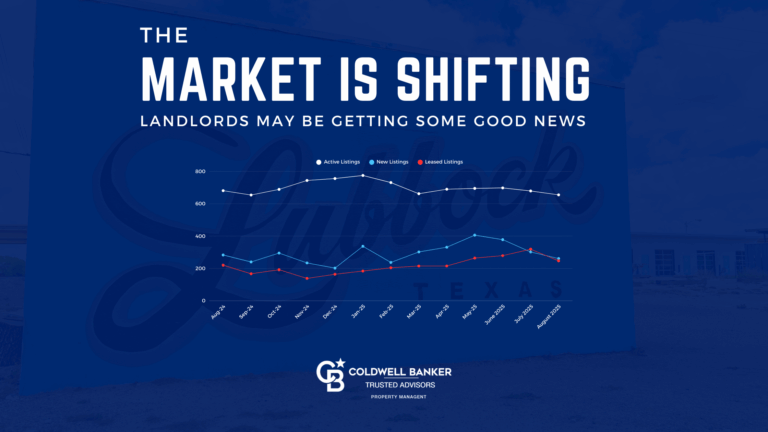
A cash-flow investor approaches the purchase differently. This investor expects the property to produce a meaningful return after financing, vacancy, maintenance, management, insurance, taxes, and turnover. That is a more aggressive objective in the current Lubbock market because properties producing those returns are not sitting in one obvious neighborhood waiting to be purchased. The return usually has to be created through a favorable acquisition price, strong financing terms, disciplined operations, or some combination of the three.
Your intended holding period changes the answer
The next question is how long the investor intends to own the property. A long-term hold can absorb ordinary market cycles. If the property is maintained, occupied, and financed responsibly, the investor has time for rent growth, debt reduction, and appreciation to work together.
A two- or three-year hold is different. Even if monthly cash flow is not important, the investor is depending heavily on appreciation and timing. The property has less time to recover from an expensive repair, a slow leasing season, or unfavorable resale conditions. That makes a short holding period more aggressive than it may initially appear.
No one can guarantee that a property will appreciate enough within a few years to justify the acquisition and selling costs. An investor buying primarily for short-term appreciation is not simply buying a rental; that investor is also making a prediction about the sales market.
What does “best-performing” actually mean?
Two investors can look at the same property and reach different, reasonable conclusions. A property that produces little monthly income but remains occupied, requires limited maintenance, and appreciates steadily may be an excellent investment for a long-term asset buyer. The same property may be unacceptable to someone who needs a 6% cash-on-cash return.
Conversely, an older property purchased below market value might produce stronger cash flow, but it may bring more plumbing exposure, deferred maintenance, turnover work, and resale limitations. The higher return is not necessarily free. The investor may be compensated for accepting more uncertainty and more active decision-making.
The first decision is about temperament
The right investment also depends on how the owner responds when the property behaves like a property. Can the owner tolerate a large repair without believing the investment has failed? Is the owner comfortable making repeated offers and hearing “no” while searching for a below-market purchase? Does the owner value predictability more than maximizing the possible return? Is there enough cash available to carry the property through vacancy or an unexpected replacement?
Those questions are not secondary. They help identify whether the investor should pursue newer construction, an existing single-family home, a value-add property, or a small multifamily investment.
There is no universal answer to “What is the best rental property in Lubbock?” The honest answer begins with another question: What do you need the investment to do?
Once the objective and holding period are clear, we can begin evaluating location, rental demand, physical condition, financing, and price. Without that first decision, an investor can purchase a perfectly good property that was never suited to the investor’s actual goal.
This article is educational and is not individualized investment, lending, tax, legal, or inspection advice. Property performance depends on purchase price, financing, condition, insurance, taxes, management, market timing, and the investor’s objectives.
Local Experience. Professional Management.
Why Work With Coldwell Banker Residential Property Management?
Property ownership should build value without consuming your time. Our team combines local market knowledge, clear systems, useful technology, and responsive service to protect your investment and simplify the ownership experience.
Simplified Ownership
We coordinate marketing, tenant screening, rent collection, maintenance, and compliance.
Property Expertise
Our approach is tailored to single-family homes, multifamily communities, and each owner’s plan.
Clear Communication
Owners receive timely information about leasing, property condition, and financial performance.
Useful Technology
Online portals, reporting systems, and marketing tools support efficient property operations.
Responsive Service
Technology supports the process, while attentive and accountable service remains the priority.
Local Market Strategy
Recommendations are grounded in current Lubbock rent, days on market, property condition, and neighborhood activity.
Let’s Talk About Your Property
Choose a convenient time to speak with Michael Fernuik about your goals and property-management needs.
Schedule Time with Michael Fernuik →