
Buying the Deal Is Only the Beginning
What multifamily investors need to know about operations, returns, and value
When people talk about buying multifamily property, the conversation usually starts with the acquisition. What is the price per unit? What is the cap rate? How much can rents increase? What does the pro forma show? Is there value-add potential? What will the property be worth in five years?
Those are all important questions, but buying the property is only the beginning. Once the transaction closes, somebody actually has to operate it.
That was one of the strongest themes that came out of a recent conversation I had with Chase Tucker, Managing Partner with the Texas Multifamily Team. Chase approaches these properties from the acquisition and disposition side. My perspective comes from the operational side, including occupancy, leasing, collections, maintenance, turnover, staffing, pricing, marketing, and all the day-to-day decisions that eventually show up on an owner's financial statements.
The more we talked, the more one thing became clear: a good purchase does not automatically become a good investment. In some cases, the way a property is operated may ultimately matter just as much as what someone paid for it.
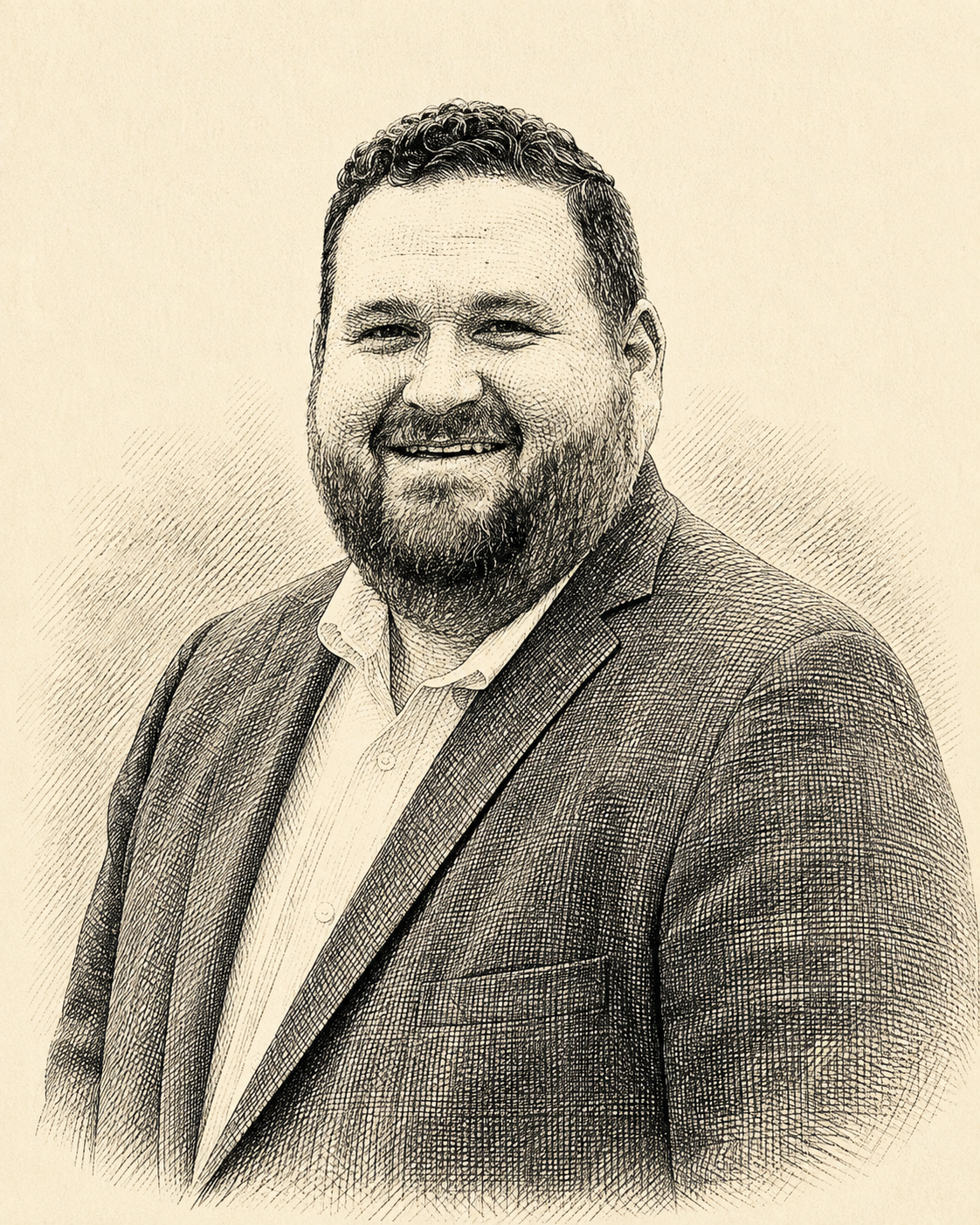
Chase Tucker
Coldwell Banker Capital AdvisorsChase brings 15 years of commercial real estate experience to the conversation and has held the CCIM designation for more than a decade. His perspective in this article comes from the acquisition and disposition side of multifamily investing, including how buyers evaluate income, upside, cap rates, and the story behind a property.
From Our Conversation
- New construction is generally easier to lease and tends to attract more financially stable residents.
- A multifamily investment needs a believable story and identifiable upside.
- Today's buyers are paying closer attention to actual cash flow and less attention to aggressive projections.
- Strong operations can ultimately be as important as the original purchase price.
The Investor Should Be the Investor
I started by asking Chase what first-time multifamily owners tend to underestimate after they actually take ownership of a property. His answer was the day-to-day operation.
There can be a misconception that buying an apartment complex automatically creates a passive investment. In reality, there are a lot of decisions that have to be made continuously. That is why Chase made a distinction I thought was worth repeating:
That does not mean every owner has to hire a third-party management company. Some owners have the staff, systems, experience, and time to manage their own properties successfully. But somebody still has to operate the business.
Someone has to decide how the property is marketed, monitor occupancy, stay on top of collections, and make decisions about vendors, materials, repairs, pricing, turnovers, and staffing. Perhaps more importantly, someone has to know which questions need to be asked when something starts going wrong.
A Real Example of Self-Management
Chase shared a current example involving a past sale in Texas. The owner was operating the property himself with two onsite employees. At first glance, that might sound like a reasonable structure. There were people physically at the property handling the daily activity, while the owner maintained oversight.
The problem was that the owner did not live locally. As decisions came up, they continued making their way back to him. He was still being asked what materials should be used, when vendors should be called, whether work was being completed correctly, and whether the onsite team was doing what it was supposed to be doing.
Because the owner was not nearby, Chase said the owner found himself traveling to the property regularly just to verify what was happening. That took time and cost money.
There was also a larger issue that the owner did not discover for roughly two years. According to Chase, the owner believed the apartment community was being advertised on Apartments.com and other rental websites. It wasn't.
The onsite staff apparently did not have the professional property-management background or systems to make sure the marketing was being handled correctly. The owner did not know that was something he needed to verify.
That is an important distinction. You can have someone onsite collecting rent, answering resident questions, and coordinating maintenance and still not necessarily have a complete property-management operation.
The property dropped to around 70% occupied, under-rented, and forced the owner to sell below where it potentially could have been positioned in a strong market. Luckily the incoming buyer was able to see professional management as part of the upside.
That is an expensive way to discover that property management is not simply an expense on an operating statement. It can directly affect the value of the asset.
What Kind of Return Should a Multifamily Investor Expect?
Naturally, this led us into returns. Investors want to know what they should expect to make, but Chase was careful not to give one universal number because there really isn't one.
The answer depends on the property, the financing structure, the amount of leverage, the condition of the asset, the required improvements, and the investor's own strategy. As Chase put it, different investors have different appetites for what they can “stomach” and what they want to work toward.
For a broader comparison, he prefers talking about cap rates. A cap rate gives an investor a way to look at the property's operating income relative to its value without bringing that particular buyer's financing into the equation.
General Cap Rate Ranges Discussed by Chase
These are broad ranges discussed during the interview, not universal valuation rules. Individual properties and transactions vary significantly.
Those numbers are more useful as a framework for understanding why asking, “What is a good multifamily cap rate?” without knowing anything else about the property is difficult to answer.
An 8% Cash-on-Cash Return Sounds Good. Is It Actually There?
Chase also talked about an 8% cash-on-cash return as something many buyers would like to achieve, while some investors may be targeting 10% or more. But there is an important distinction between an investor's target return and what a property is actually producing today.
I pushed him on that point. With current financing costs and the capital environment, how realistic is an 8% cash-on-cash return on actual day-one income?
His answer was straightforward. It is very difficult, and that difficulty is one of the reasons fewer multifamily deals are transacting. There is still plenty of interest in multifamily, but the challenge is making the numbers work.
COVID-Era Deals Changed Expectations
Chase pointed back to the environment around 2020 and 2021. At that time, investors could acquire properties with very favorable financing, and rents were increasing rapidly in many markets.
That combination allowed some investors to buy aggressively, increase rents, improve income, and still have an attractive exit strategy. The problem is that those conditions did not last forever.
Loans mature and debt has to be refinanced. A property purchased using assumptions from 2020 or 2021 may have faced refinancing several years later in a dramatically different lending environment. Suddenly, the debt costs more, the property may not be worth what was originally projected, and the exit strategy may no longer work.
The return that looked achievable five years earlier can become much harder to deliver. Chase said that is one reason buyers today are putting more emphasis on existing actual cash flow. They are still looking at pro formas, but they are much more interested in making sure there is enough real income in place today so they do not “get burned later down the road.”
A Pro Forma Is a Possibility, Not a Promise
This is an area where Chase's brokerage perspective and my operations perspective overlap quite a bit.
There is nothing wrong with a pro forma. A broker may show that rents have room to increase, occupancy can improve, expenses may be reduced, units can be renovated, or marketing can be improved. All of those assumptions may be perfectly reasonable.
The problem comes when owners look at the stabilized number on the pro forma and mentally turn that into today's return.
Especially with older properties that have been self-managed, the broker may have to sell the opportunity based partly on what the property could do rather than what it is currently doing. That does not mean the numbers are wrong. It means someone still has to execute the plan.
If an owner has three years of operating statements showing that the property consistently produces a certain level of income, that is one thing. If the return depends on raising rents, improving occupancy, reducing expenses, renovating units, and improving collections, then the buyer is not just buying a property. They are buying an operational project.
What Kind of Property Does Chase Actually Like to List?
At one point, I asked Chase a different type of question. If he could choose the multifamily property he wanted to bring to market, what would he like to list?
His first answer was new construction. From an operational standpoint, it makes sense. Newer properties generally command higher rents. They tend to attract more financially stable residents, and they typically have fewer physical issues because the property and its major systems are newer.
They are also more likely to already have professional property management involved, which usually means more established systems around leasing, marketing, maintenance, collections, and reporting.
There is also something much simpler happening. I tell owners all the time that tenants are like raccoons. They like shiny things. New countertops, newer flooring, updated finishes, modern amenities, and something that simply feels new will attract people. It is generally easier to create demand around a newer apartment community because the property itself is helping you market it.
Chase likes that kind of property, but he also pointed out the downside.
What Is the Story?
Chase kept coming back to a phrase that I think is important when thinking about multifamily transactions: What is the story?
Why should the next investor buy this property?
A new apartment community may have high occupancy, strong rents, modern interiors, professional management, good marketing, and efficient operations. All of that is excellent for the current owner, but it can make the next question harder to answer: where is the upside?
There are always buyers who believe they can do something better. But if the property is already operating close to peak efficiency, it becomes harder to demonstrate a meaningful improvement opportunity.
That is where Chase pivoted to another type of property he finds interesting, properties built in the 1990s through the early 2000s.
Those can fall into an attractive middle ground. They are generally not so old that every major system immediately becomes a concern, but they are old enough that there may still be meaningful room for improvement.
Maybe the interiors are dated. Maybe rents have room to move. Maybe the amenities need work. Maybe marketing could improve. Maybe operating expenses could be tightened. Or perhaps the property has simply been owned for a long time by someone who is comfortable with its current performance and has not aggressively pursued every available opportunity.
Now Chase has something to sell beyond the existing income. He has a story.
The Best Upside Is Something the Buyer Can Actually Control
This distinction became especially important when we started talking about value-add properties. There is a difference between operational upside and speculation.
Improving collections, reducing vacancy, correcting under-market rents, improving marketing, turning units faster, and renovating dated units are operational improvements. Those are things an owner can influence.
Assuming that cap rates will be significantly lower five years from now is different. So is assuming interest rates will move exactly where you need them to move, or that another buyer will pay significantly more simply because time has passed.
That does not mean value-add multifamily is dead. Chase's view was essentially the opposite. Those deals are still happening, but investors need to be much more thoughtful about where the upside is actually coming from.
A strong investment story should involve things the next owner has a reasonable ability to influence. That is very different from simply hoping the market bails the deal out later.
Why Syndications Feel This More Acutely
Our conversation also moved into syndications. For someone unfamiliar with the term, Chase described a syndication as an investment structure where a sponsor or general partner raises money from multiple limited partners and pools that capital together to acquire a property.
Those investors generally expect a return. There may be a preferred return of 7% or 8%, along with additional proceeds when the property is eventually sold. Over the full holding period, the investment may have been projected to generate a larger annualized return.
The problem comes when the disposition value does not materialize. If the syndicator projected that a property would be worth a certain amount four or five years later and today's market will not support that price, the entire return structure changes.
It becomes harder to deliver the return that was originally promised or projected, and it becomes harder to raise the next round of investor capital. As Chase pointed out, investors have other places to put their money. If the additional potential return from multifamily does not justify the additional risk, complexity, and illiquidity, the deal becomes harder to sell to investors.
Which Matters More: Purchase Price or Operations?
This may have been my favorite part of the conversation.
Obviously, you want to buy a property correctly. Purchase price matters, basis matters, and nobody wants to overpay. But I asked Chase whether the acquisition price was ultimately more important than the infrastructure surrounding the operation of the property.
At first, he said they were equally important. Then he went further.
Imagine somebody buys an apartment complex for $40,000 per unit. Maybe the seller was distressed, maybe the investor negotiated an incredible deal, or maybe comparable properties would typically sell for considerably more. That sounds great, but the property still has to make money.
If occupancy is poor, collections are weak, turnover is unmanaged, expenses are uncontrolled, and the leasing operation is ineffective, buying cheaply does not magically turn that property into a good investment. The income still has to come in.
On the other side of the transaction, when the owner decides to sell, buyers are not simply looking at what the seller originally paid per door.
Chase then went one step further.
That is a pretty significant statement coming from the person whose job is helping people buy and sell the property.
Property Management Isn't Something That Happens After the Investment
I think owners sometimes separate these two things too much. They think about the investment first: find the property, negotiate the price, arrange financing, close, and then figure out management.
But operations are not separate from the investment. Operations affect occupancy, rental rates, collections, bad debt, resident retention, turnover costs, maintenance expenses, marketing effectiveness, vendor expenses, payroll, capital planning, and net operating income.
Ultimately, net operating income influences the value of the property. That means property management is not simply an administrative function sitting underneath the investment. It is part of the investment strategy.
Sometimes the Problem Is Also the Opportunity
The property Chase described is probably the clearest example of that. One investor could look at a property that is 70% occupied and under-rented and see a problem. Another investor may look at the exact same property and see the story.
What happens if professional marketing generates more leads? What happens if occupancy improves, rents are brought closer to market, collections improve, vacant units turn faster, and onsite staff has stronger accountability and better systems?
Those are not improvements based entirely on hoping the broader market changes. They are operational improvements, and that may be exactly where some of the best value-add opportunities are today.
Before You Buy, Ask Who Is Going to Operate It
There are owners who can successfully self-manage multifamily properties. Professional management is not automatically the right answer for every investor. But there is a big difference between having somebody onsite and having an actual operating platform.
Before buying a multifamily property, investors should probably be asking operational questions alongside the financial ones.
- Who is responsible for leasing?
- How will the property be marketed?
- How will rental rates be evaluated?
- Who is watching collections?
- What happens when occupancy starts slipping?
- How are vendors selected and supervised?
- How quickly will vacant units be turned?
- Who is reviewing expenses?
- How is performance being measured?
- Who is going to recognize the problem before the owner does?
By the time an apartment complex reaches 70% occupancy, the problem probably did not start yesterday. It has likely been developing for quite some time.
The Bottom Line
There are a lot of moving pieces in a multifamily investment. Cap rates, purchase price, financing, property age, value-add potential, and the exit strategy all matter. Eventually, though, all of those assumptions meet the actual operation of the property.
That is where the spreadsheet becomes reality. A newer, highly occupied property may be easier to operate and easier to lease because, as I like to say, tenants like shiny things. But it may also have less obvious upside for the next investor.
An older property may have a much better “story,” but only if the opportunity is something the next owner can realistically execute. A bargain purchase price does not fix bad operations.
The lesson I took away from my conversation with Chase is not that every multifamily investor needs a professional management company. It is that every multifamily investor needs to take the operating side of the investment as seriously as the acquisition side.
When that property eventually goes back on the market, the next buyer is not buying what you intended to accomplish. They are buying what the property actually produces, and that story starts being written the day you take ownership.